Spendly
AI Financial Management App
Project Overview
Spendly is an AI-driven personal finance app designed to simplify money management for everyone — especially beginners. It offers automatic expense tracking by syncing with UPI and bank accounts, helps users create personalized budgets, and provides intelligent investment suggestions tailored to individual goals. With an intuitive UI and a security-first approach, Spendly empowers users to take control of their financial journey with confidence and clarity.
Problem
Most people struggle with tracking expenses, managing savings, and knowing where to invest as beginners.
Solution
Spendly solves this with AI-driven insights, real-time UPI/bank sync, and beginner-friendly budgeting tools
Vision
To empower individuals with smart, stress-
free financial tools that help them spend
wisely, save consistently, and grow their
wealth confidently.
Mission
To simplify personal finance through intuitive design, automation, and AI, making smart money habits accessible to everyone — no matter their background or experience.
Key Features
Auto Expense Tracking
Easily track all your spending with seamless UPI and bank account integration.
Smart Budget Planner
Create and manage personalized budgets with intelligent alerts and recommendations
AI Investment Guidance
Get beginner-friendly, AI-powered suggestions tailored to your financial goals.
Clean, Intuitive UI
A minimal and user-friendly interface designed for clarity and ease of use.
Dark Mode Support
Switch effortlessly between light and dark themes for better visual comfort.
Secure by Design
Your financial data is protected with robust, security-first architecture.
UI Highlights
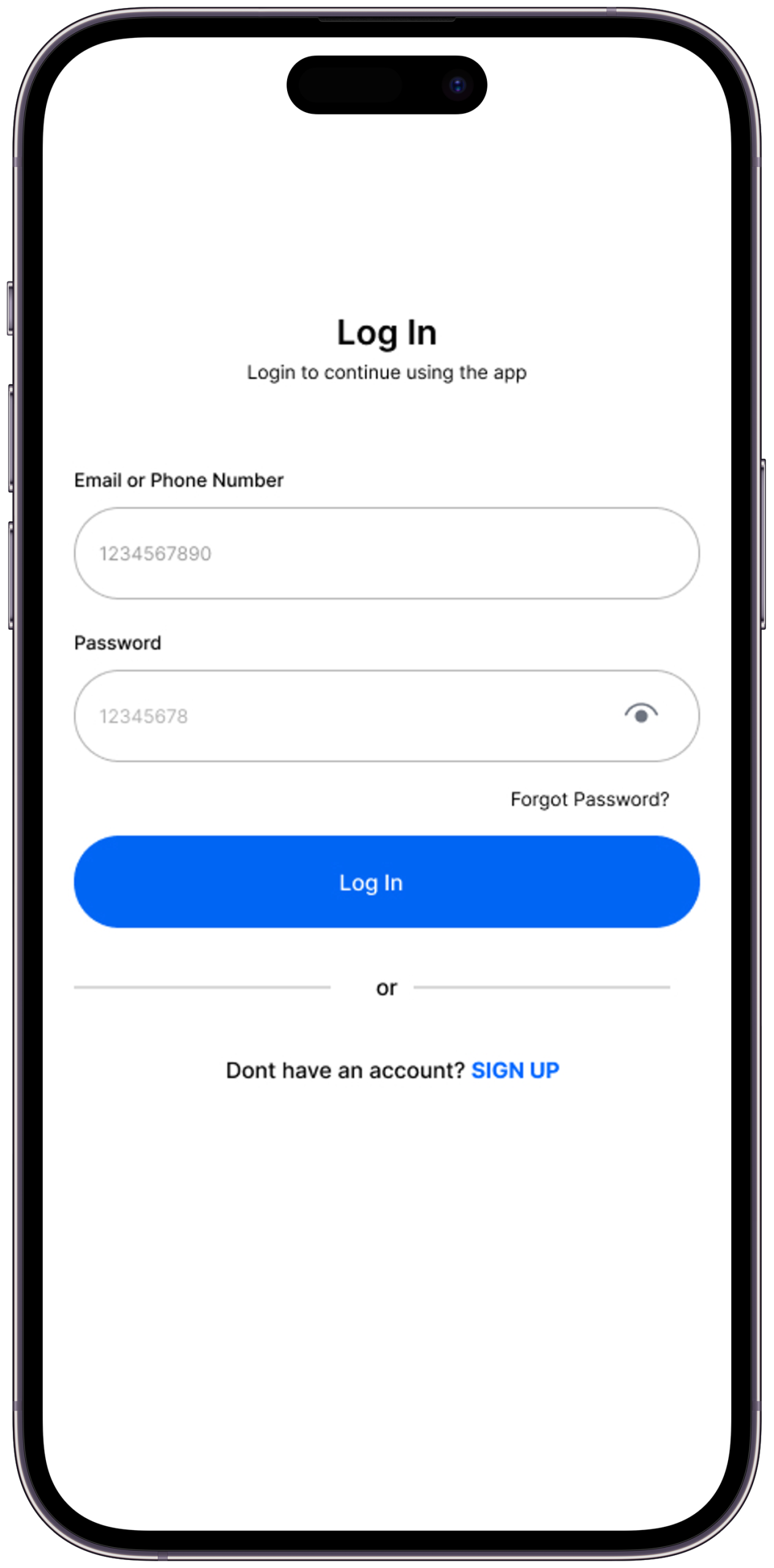
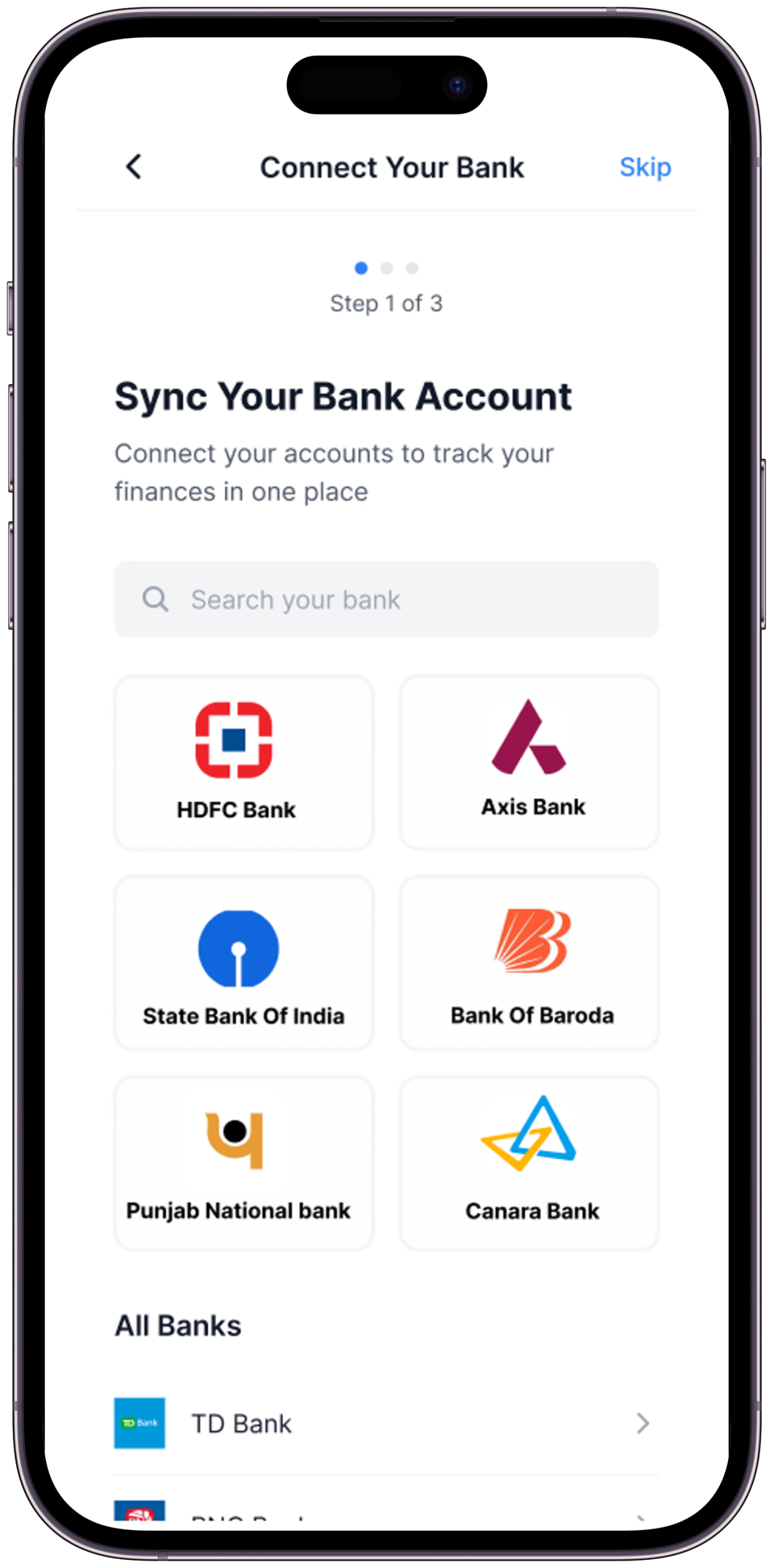
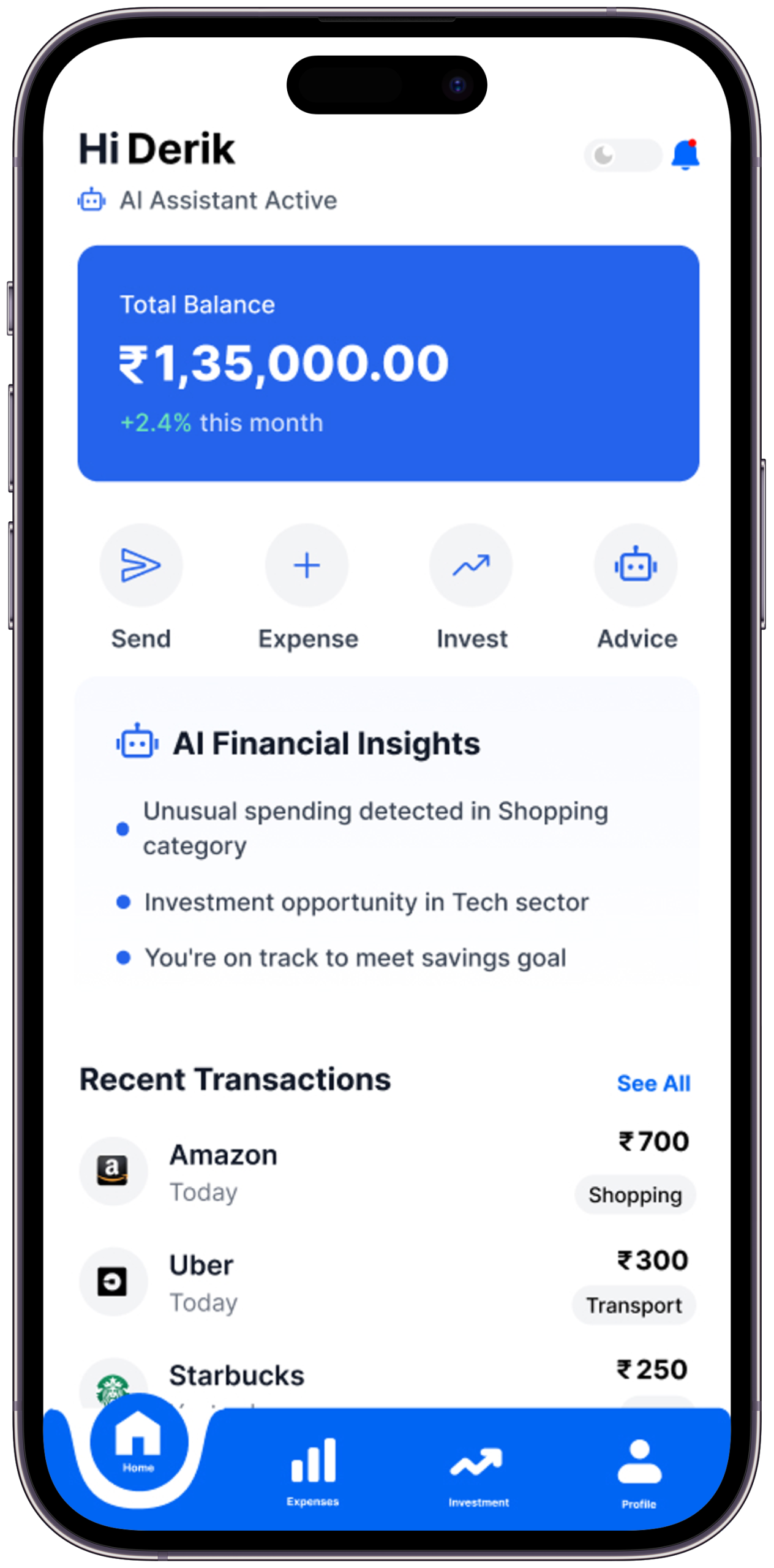
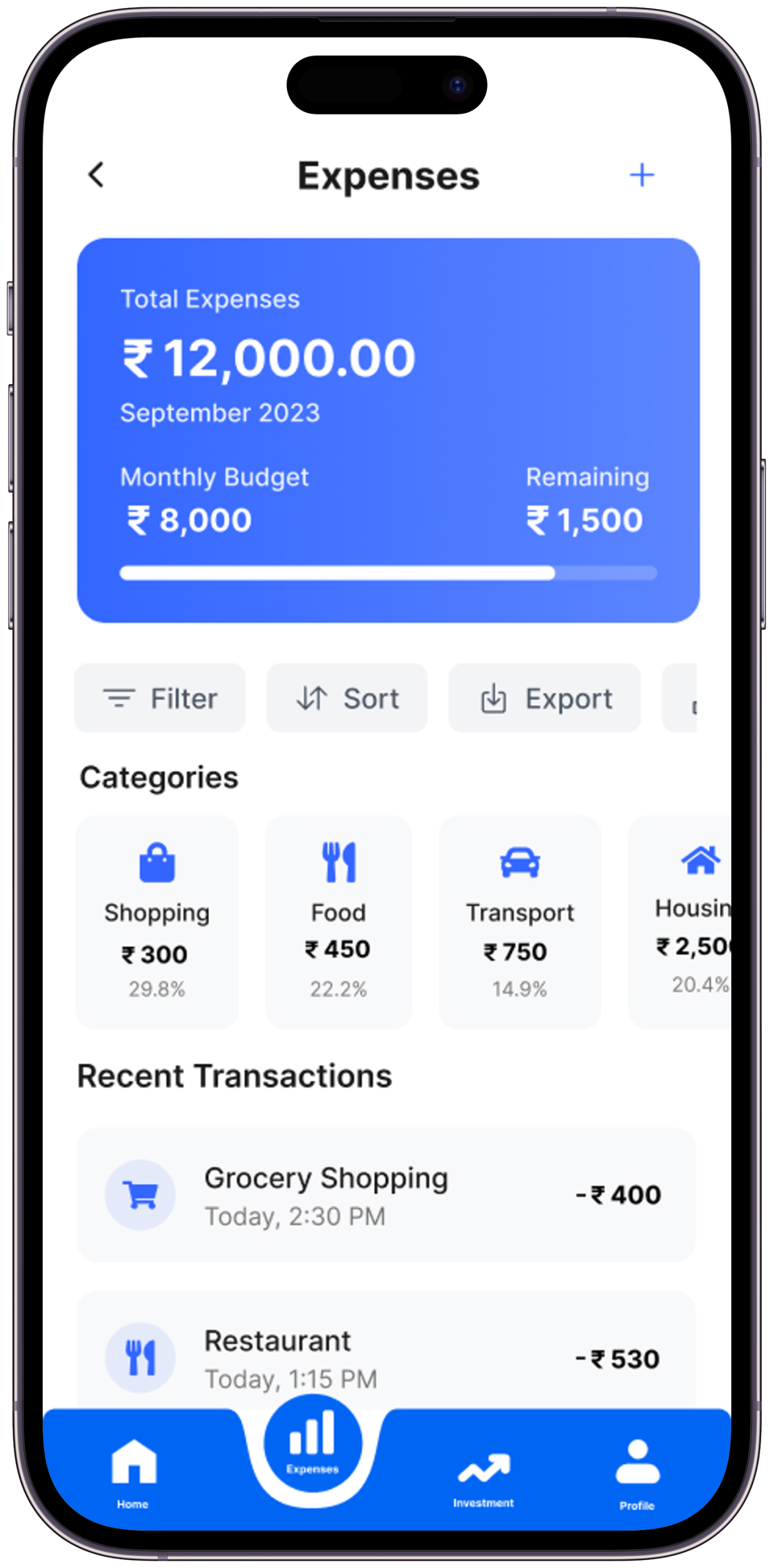
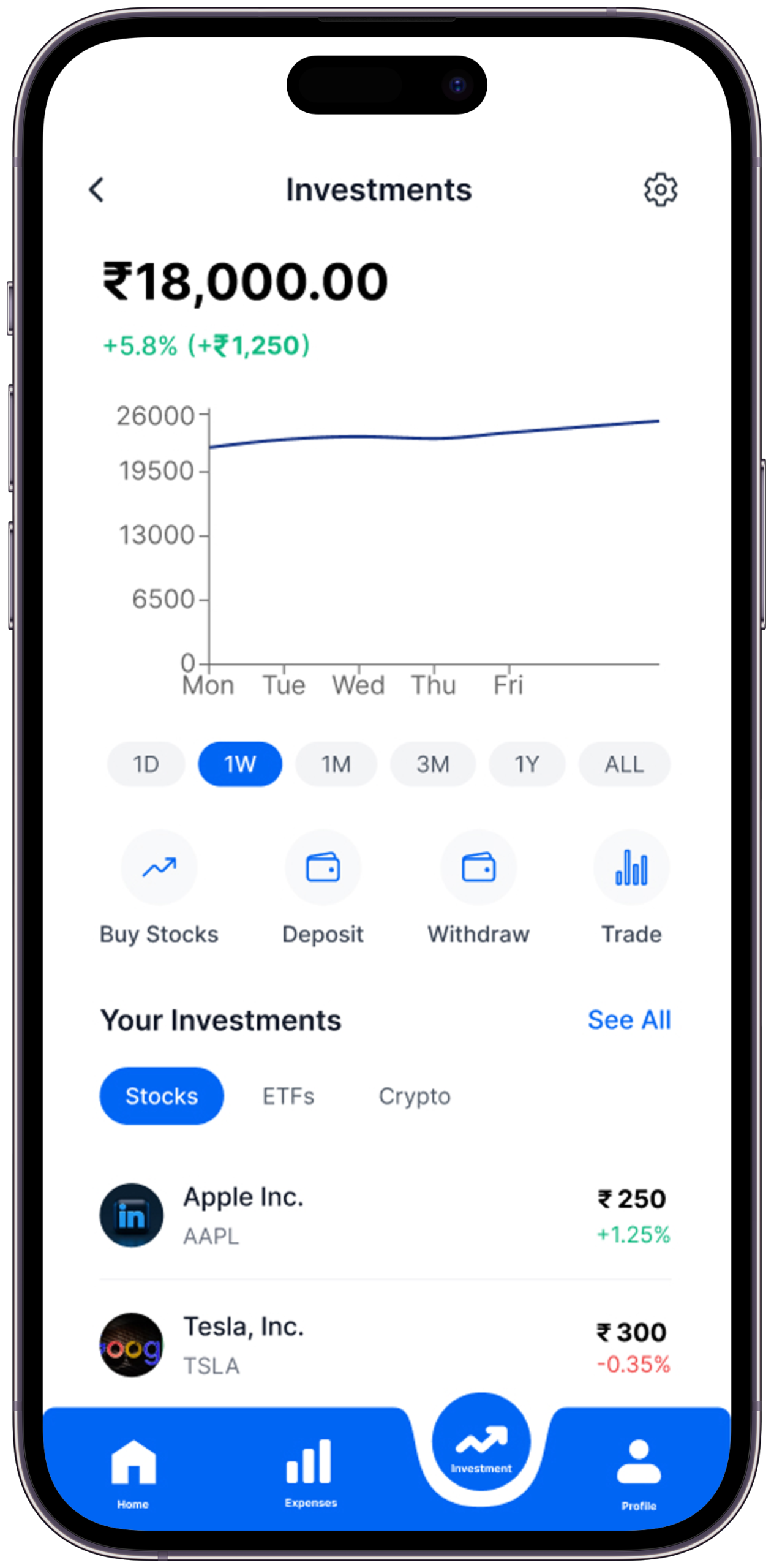
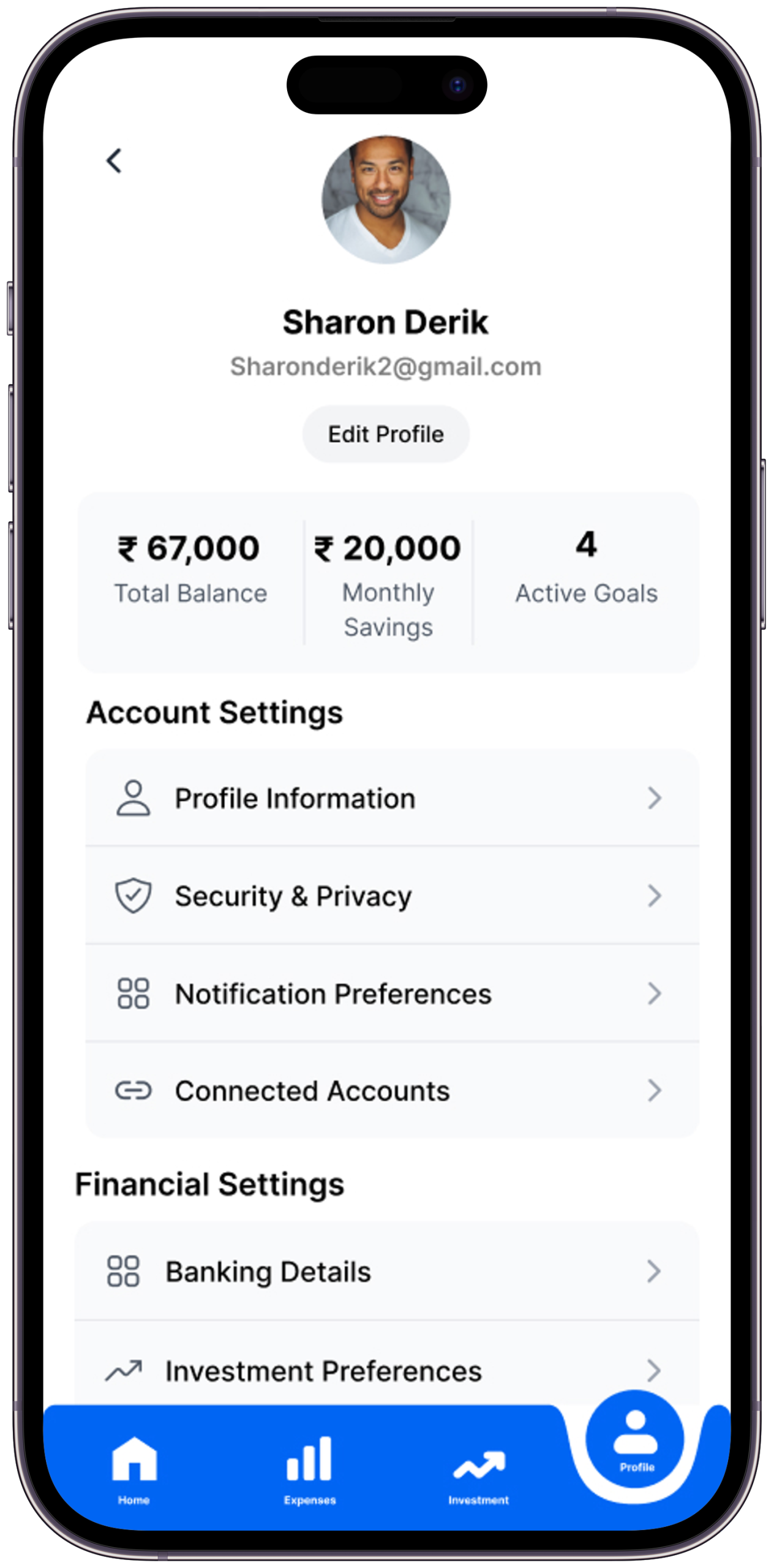
Logo


What I learned from building this project
I learned how to translate complex financial workflows into a user-friendly experience by focusing on simplicity, clarity, and accessibility.
How it improved my design or research thinking
It strengthened my ability to approach problems with a research-first mindset, align features with real user needs, and validate ideas through testing and iteration.