Skip to content
ScrapX — UX Case Study · Sharon Derik
Back
UI/UX Design · Mobile App · Sustainability · 2025
FigmaUX Research Circular EconomyAndroid · iOS10 Weeks
ScrapX.

Turning waste into worth — one fair transaction at a time

4+Target Audiences
6Core Features
2User Types
Eco-Impact Focus
Figma Prototypes Available
The StoryWhere It Begins

In India, millions of kilograms of recyclable scrap change hands every day — through a system built entirely on informal trust, opaque pricing, and zero accountability. ScrapX was born from one question: what if this industry worked the way the people inside it actually deserve?

Chapter 01 — Project Overview

What is ScrapX?

A mobile platform connecting scrap sellers, dealers, and recyclers in one trusted ecosystem

ScrapX is a smart scrap buying and selling mobile application bridging the gap between individual households, small businesses, and organised scrap dealers. In India alone, the informal scrap economy handles millions of tonnes of recyclable material annually — yet it remains fragmented, opaque, and difficult to navigate for ordinary users.

The platform provides fair price discovery, verified dealer profiles, scheduled pickups, live tracking, and digital payments — bringing transparency and trust to an industry that has historically operated through informal networks and word-of-mouth pricing.

This case study covers the complete UX journey: first-hand research, persona building, information architecture, wireframes, a full design system, usability testing, and final impact metrics.

₹1.5L Cr
India's informal scrap economy is valued at over ₹1.5 lakh crore annually — yet 78% of households report feeling underpaid on every transaction. ScrapX addresses not just a human frustration, but a massive, addressable economic inefficiency.
Project Details
ProjectScrapX
Duration10 Weeks
My RoleUX Researcher + UI Designer
TeamSolo Project
PlatformMobile App (iOS + Android)
ToolsFigma · FigJam · Notion
Accent#0C9488 — Scrap Teal
UsersSellers · Dealers · Recyclers
StatusConcept · Prototype Ready
Act IThe Problem

India generates over 62 million tonnes of solid waste annually. A massive portion of recyclable scrap never reaches organised recycling chains — not because people don't care, but because the system that should serve them is built on mistrust, price manipulation, and zero digital infrastructure.

Chapter 02 — The Challenge

A system designed to confuse
the very people it serves.

Three compounding failures that ScrapX was built to break — on both sides of the transaction

⚖️ Problem 01 No Price Transparency Scrap prices vary wildly between dealers and change daily, but sellers have no way to compare or verify them. The lack of standardised pricing means dealers can — and regularly do — underprice material without consequence. Households lose money on every transaction.
🚛 Problem 02 Unreliable Pickups Informal kabadiwala networks operate on mood and availability. No scheduling, no tracking, no accountability. Sellers wait hours with piles of material that may never get collected. No-show rates were reported as high as 40% across interviews.
🤝 Problem 03 Zero Trust Infrastructure No verified profiles, no ratings, no dispute mechanism. Both sides operate on blind faith. This especially affects women and elderly sellers who report feeling unsafe during cash transactions with unknown collectors.
For Dealers Like Ravi — the other side of the same broken system
🔄 Inconsistent Supply Wasted fuel and time on no-show pickups. No way to know daily volume in advance, making route planning impossible.
📍 Limited Reach Unable to grow business beyond their immediate neighbourhood. New customers come only through word-of-mouth — slow, unpredictable, and unscalable.
🏅 No Reputation System Good dealers are indistinguishable from bad ones. Without verified ratings, trust must be rebuilt from zero with every new seller — losing deals before they start.

"The kabadiwala came three times this week — but every time the price was different and I never knew who was cheating whom."

— Research Participant · Bengaluru · Homemaker, 44
Act IIUnderstanding People

Before touching a single wireframe, I spent two weeks speaking directly to people living inside this broken system — visiting scrap dealers, sitting in household kitchens, and watching transactions happen in real time. Their words shaped every design decision that followed.

Chapter 03 — User Research & Insights

Listening before designing.

Qualitative interviews, contextual surveys, and competitive analysis across 3 cities

🎙️ Method 01 — Interviews 12 In-Depth User Sessions Semi-structured interviews (35–50 min) across 3 user groups: households, small businesses, and scrap dealers in Bengaluru, Hyderabad, and Chennai. Questions focused on frequency, frustration, trust, and workarounds. 5 sessions were conducted in-home to observe live transactions.
📋 Method 02 — Survey 68-Response Contextual Survey Distributed via WhatsApp community groups. 68 responses across 3 cities — respondent split: 61% household sellers, 24% small business owners, 15% dealers. Age range 24–58. All participants owned a smartphone and used at least one consumer app weekly.
🔍 Method 03 — Competitive Analysis 6-Platform Feature Audit Audited OLX, Scrapuncle, I-Scrap, KabadiwalaExpress, and two local apps. Mapped feature gaps across live pricing, pickup scheduling, dealer verification, digital payment, real-time tracking, and ratings. See matrix below.
Competitive Feature Matrix
PlatformLive PricingPickup SchedulingDealer VerificationDigital PaymentReal-Time TrackingRatings / ReviewsAll 6 Features
OLXPartialPartialPartial
Scrapuncle
I-ScrapPartial
KabadiwalaExpressPartialPartial
Local App APartial
Local App BPartial
ScrapXAll 6 ✓
What the Matrix Tells Us

While several apps solve for one piece of the puzzle — like scheduling or classifieds — none create a trusted, end-to-end transaction loop. Users are forced to cobble together multiple tools or fall back to cash and uncertainty. ScrapX's core advantage isn't just having all six features — it's weaving them into a single, seamless experience that builds confidence at every step of the transaction.

78%experienced unfair pricing at least once in the past month
64%cited unreliable pickup as their primary frustration
89%would switch to a transparent, scheduled pickup platform
3xmore scrap transacted when live price comparisons were available
User Personas

The people we designed for.

Two primary personas that shaped every feature decision throughout the project

👩
Meena SharmaHousehold Seller · Bengaluru · 38
GoalGet a fair price for household scrap without feeling cheated or unsafe
PainDoesn't know if weight or price is accurate; pickups are unreliable
DigitalUses WhatsApp daily; comfortable with Swiggy and Zomato
MotivationExtra income + wanting to make an eco-responsible choice
FearBeing alone during a cash handover with an unknown collector
SellerPrice-SensitiveTrust-First
"I always ask my neighbour to stay with me when the kabadiwala comes. You never know who it will be." — Interview 07 · Bengaluru · Grounded this persona's safety concern
👨‍🔧
Ravi KumarScrap Dealer · Hyderabad · 34
GoalExpand reach beyond neighbourhood, get consistent daily supply volume
PainInconsistent volume, no-shows after confirmation, wasted fuel trips
DigitalUses WhatsApp Business; occasionally struggles with UPI
MotivationGrow business, build a verified reputation to attract new sellers
FearBeing undercut by a competitor with a better digital presence
DealerVolume-DrivenReputation-Builder
"I drive 20 minutes to a confirmed pickup and half the time there's no one home. There's no system — I just have to guess." — Interview 03 · Hyderabad · Grounded this persona's no-show frustration
Scope note: Meena's empathy map reflects v1's seller-first scope. Ravi's condensed map follows, capturing the dealer perspective that informed the IA, dealer flow, and v2 product roadmap.
Empathy Map — Meena Sharma

Inside the seller's world.

🧠 Thinks & Feels
Is this price actually fair or am I being taken advantage of?
I feel embarrassed negotiating with the kabadiwala in front of neighbours
I wish I could schedule this like ordering food — simple and reliable
I never know if the weight measurement is accurate
👀 Sees
Neighbours getting different prices for the exact same material
Scrap piling up in the corner for weeks waiting for a collector
Richer colonies getting faster, more professional service
Young family members using apps for everything — except this
🗣️ Says & Does
Calls the same dealer repeatedly just to remind him about the pickup
"I just accept whatever he says — I don't know the prices anyway"
Stores receipts manually in a notebook; sometimes loses them
Asks her neighbour to stay home during collection "just in case"
😣 Pain Points
No way to compare prices between dealers before committing
Dealers who promise pickup and then never show up
Cash-only transactions with no digital record or receipt
Feeling like she has no power in the negotiation at all
Empathy Map — Ravi Kumar

Inside the dealer's world.

🧠 Thinks & Feels
"If only I could fill my truck in one trip instead of driving around guessing."
My business is good but it could be so much bigger with the right customers.
I'm reliable — but how would anyone know that before they meet me?
Every wasted trip costs me fuel, time, and income I can't get back.
👀 Sees
The same few streets every day, unable to expand beyond his neighbourhood
Competitors undercutting him on price because they can't differentiate on trust
Sellers going with whoever arrives first, not whoever is most reliable
Other industries using apps to grow — wondering why scrap is stuck in the past
🗣️ Says & Does
Wakes up early, drives to confirmed pickups that don't answer the door
Pays in cash, relies entirely on word-of-mouth to find new sellers
"I've been doing this 8 years — but no one outside my area knows that."
Keeps a mental map of loyal sellers; forgets newer contacts without a system
😣 Pain Points
Wasted time and fuel on no-shows with zero accountability from sellers
Difficulty finding new customers beyond word-of-mouth recommendations
Being lumped in with untrustworthy dealers before he's had a chance to prove himself
No digital record of his pickup history, volume, or customer satisfaction
Key Research Insight

The biggest barrier to adoption wasn't price or technology — it was trust. Users didn't need a smarter app; they needed to feel the system was finally working for them, not against them. Every design decision flowed from this single finding.

Act IIIBuilding the Solution

With research complete, I moved into structure. Before any visual design, I needed to map out how users would actually move through the product — what they needed to do, in what order, and what could go wrong at each step.

Chapter 04 — Information Architecture

Mapping the journey.

Visual user flows built for both personas before a single pixel was placed. V1 scope is seller-first; a dedicated dealer product with route optimisation and inventory management is scoped for v2.

Seller Flow — Meena books a scrap pickup
📲
Open App
Entry
📦
Select Scrap Type
Classify
⚖️
View Live Prices
Discover
👤
Browse Dealers
Trust Check
📅
Schedule Pickup
Book
📍
Track in Real Time
Follow
💳
Digital Payment
Transact
Rate Dealer
Review
Dealer Flow — Ravi manages incoming requests
🔔
Receive Request
Alert
🗺️
View Location
Assess
Accept / Decline
Decide
🚛
Head to Pickup
Travel
⚖️
Weigh Material
Verify
💰
Auto-Calculate Pay
Price
📄
Digital Receipt
Record
Chapter 05 — Wireframes & Lo-Fi Prototypes

Thinking in structure,
not pixels.

Lo-fi concepts tested before any visual design — speed over beauty at this stage

01
Story-Led ✓ Feature-Led
Onboarding Flow Tested 2 versions — feature-led vs. story-led. Story-led won by a significant margin: participants felt confident about what the app did for them before signing up.
02
Price Discovery Live price ticker placed above the fold. An early version buried prices inside a tab; testing showed users expected pricing upfront before any other action.
03
Pickup Scheduling Calendar-style date picker with time slots. An initial free-text field was dropped after testing showed the doctor's appointment mental model reduced hesitation significantly.
04
Dealer Profile Verified badge and reliability score above the fold. Leading with credentials rather than name and photo dropped drop-off at this critical decision point.
Lo-Fi → Hi-Fi Iterations — How Testing Shaped the Design
Example 01 — Home Dashboard: Price Ticker Placement
Lo-Fi: Prices buried in tab
Home
Prices
Book
Avg 14 sec to locate prices. Users didn't know to look inside a separate tab first.
Hi-Fi: Ticker above the fold
Iron ₹28/kgPaper ₹9/kgPlastic ₹12/kg
SCHEDULE PICKUP →
Avg 4 sec to locate prices. CTA stays visible directly below the ticker.
Example 02 — Dealer Listing: From Plain List to Trust-First Card
Lo-Fi: Name + distance only
Users couldn't differentiate between dealers — 6/8 said they'd just pick the closest one.
Hi-Fi: Trust signals on the card
✓ Verified
★★★★
8/8 could now make a confident selection — trust first, proximity second.
Example 03 — Tracking Screen: Simplified to Critical Info Only
Lo-Fi: All info shown at once
5/8 missed the ETA countdown — screen had too many competing elements.
Hi-Fi: ETA + dealer + map only
8 min
On the way
8/8 immediately understood ETA — three elements, zero confusion.
Act IVVisual Design

With architecture validated, I moved into the visual layer. The design system needed to feel clean and trustworthy — but not sterile. The teal palette was chosen deliberately: it sits between industrial green and medical blue, signalling both eco-responsibility and reliability.

Chapter 06 — Brand Identity

The mark that says trust me.

A logo built to work across dark interfaces, light receipts, and printed labels — at any size

🎨
Brand Strategy

The ScrapX brand needed to signal two things at once: the environmental responsibility of recycling (green) and the financial reliability of a bank (blue). Scrap Teal sits at the exact intersection of these two ideas — trustworthy enough for a financial transaction, earthy enough to mean something ecological. It's not just a colour; it's a positioning statement in a single hex value.


White Variant — Dark Backgrounds
ScrapX Logo White
Black Variant — Light Backgrounds
ScrapX Logo Black
Clear SpaceMinimum 1× logo height on all sides
Minimum Size24px height digital · 8mm print
Approved OnDark teal · Pure black · Pure white
NeverStretch, rotate, recolour, or place on busy backgrounds
Design System

Built for trust at first glance.

A design system grounded in clarity, confidence, and environmental responsibility

Colour System

Five tones spanning from deep environmental dark through to high-contrast action. Teal signals trust, dark backgrounds reduce eye strain for outdoor use, and contrast ratios ensure readability in bright sunlight.

Scrap Teal#0C9488
Deep Dark#030807
Warm White#E7E6E2
Muted Sage#6F7572
Light Teal#1AB5A8
Typography
DisplayPlayfair Display
BodyPlus Jakarta Sans
Mono / UIDM Mono
AccentInstrument Serif Italic
Component Library

Built with full states: default, hover, active, error, disabled. Minimum 44px tap targets, high contrast for outdoor readability, zero hidden affordances.

Primary Button
SCHEDULE PICKUP →
Ghost Button
VIEW PRICES
Verified Badge
✓ Verified Dealer
Price Chip
₹28/kg · Iron
Rating Display
★★★★4.2 · 89
Status Pills
On the wayPending
High-Fidelity Screens

The final visual language.

Six screens — each directly answering a user need uncovered in research, built to make the informal scrap economy feel trustworthy for the first time
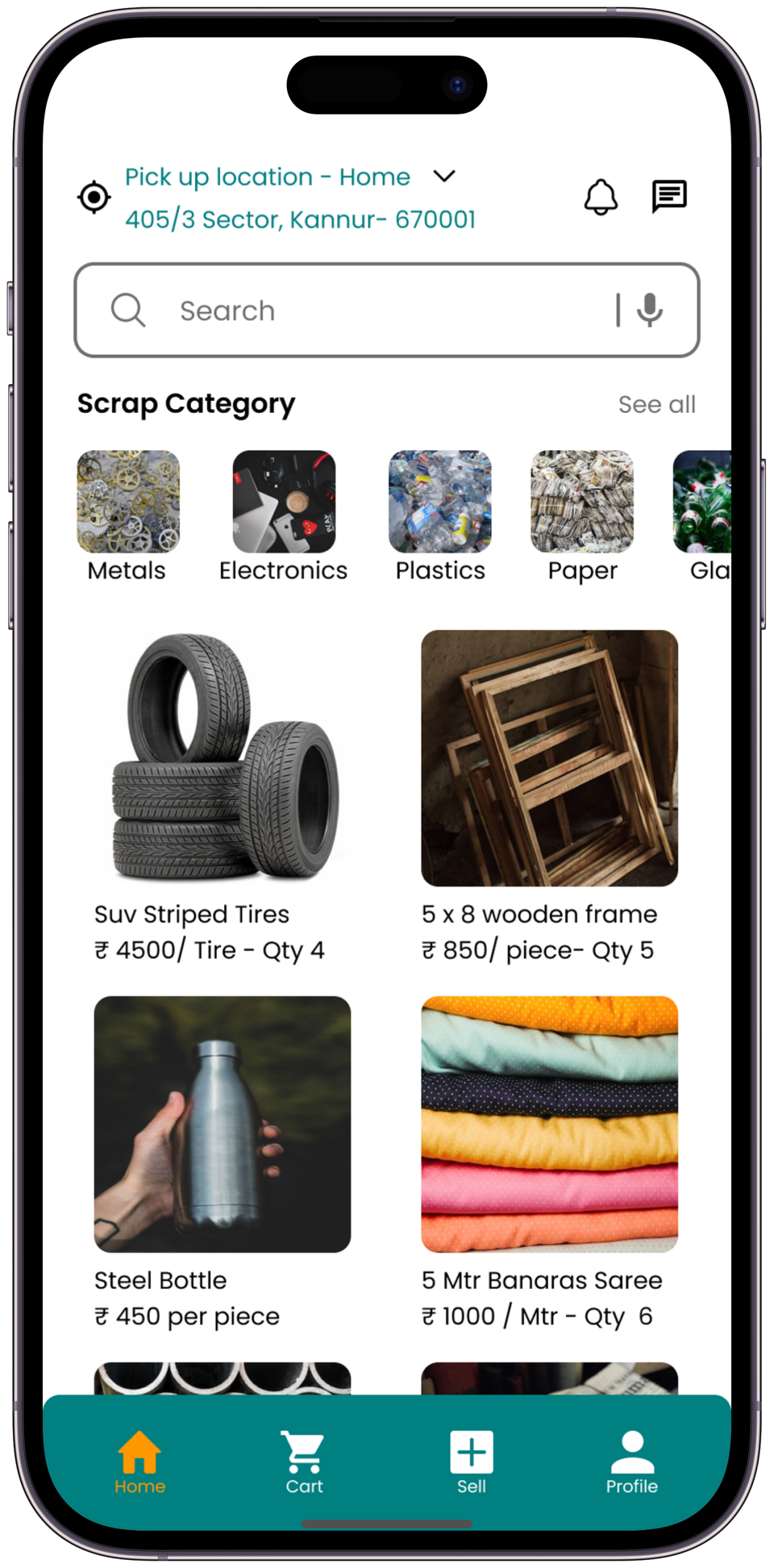
Screen 01
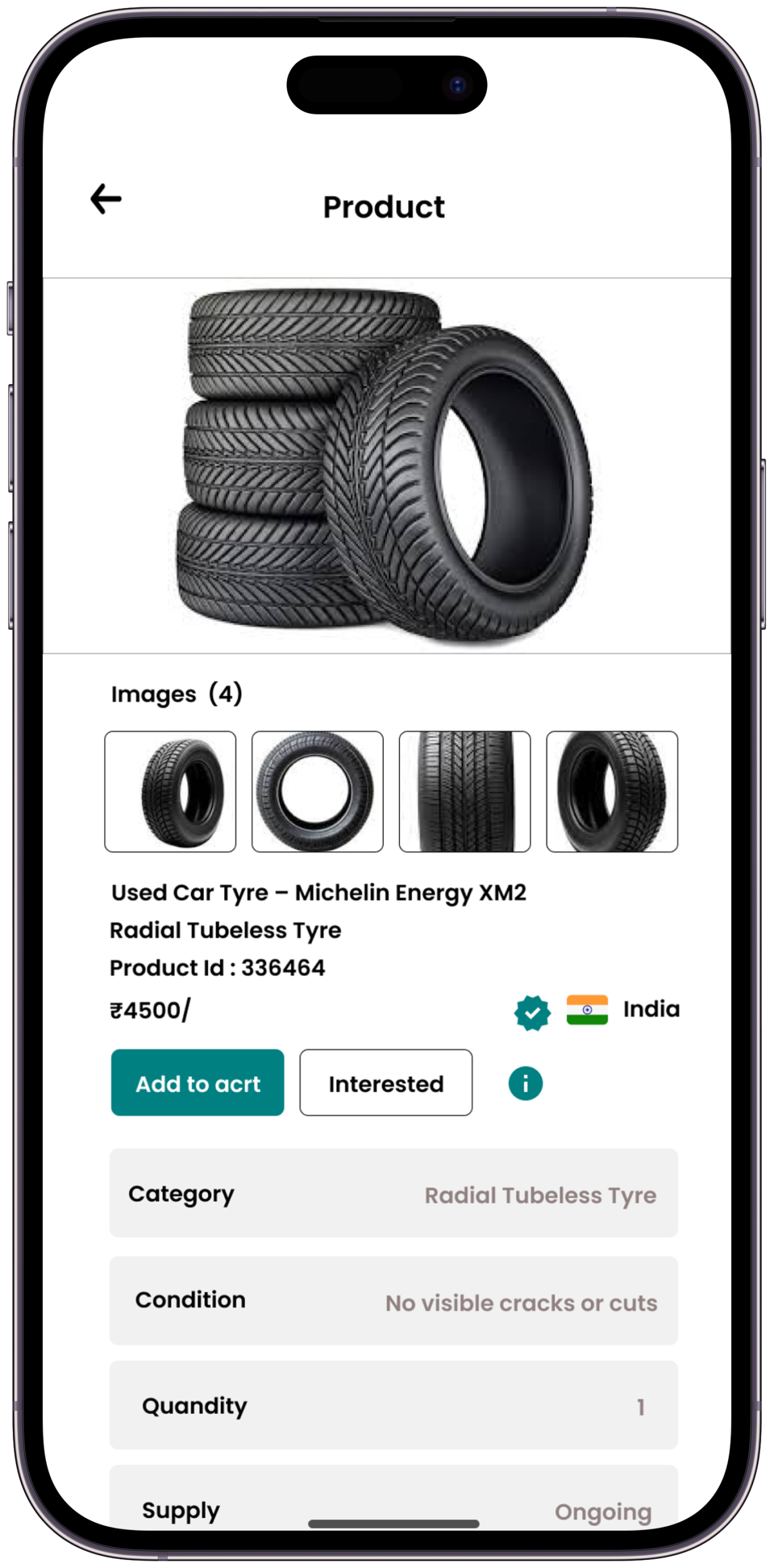
ScrapX Home Dashboard
Screen 01 Home Dashboard The central hub of ScrapX where users quickly understand the current scrap market and start a pickup request. The dashboard highlights scrap categories, quick price insights, and nearby dealer availability so users can act immediately without navigating through multiple screens. Meena: "I just want to know what my scrap might be worth before someone comes to collect it." Design decision: Key actions like scrap categories and pickup booking are placed at the top to help users quickly begin the selling process without navigating through multiple screens.
Screen 02
ScrapX Live Price Discovery
Screen 02 Live Price Discovery A transparent price overview showing approximate market rates for different scrap materials such as metals, plastics, electronics, and paper. This helps users estimate the value of their scrap before scheduling a pickup. Meena: "I always wondered if dealers were giving the right price. Now I can see the rates myself." Design decision: Prices are grouped by material category to help users quickly scan and understand the potential value of their scrap.
Screen 03
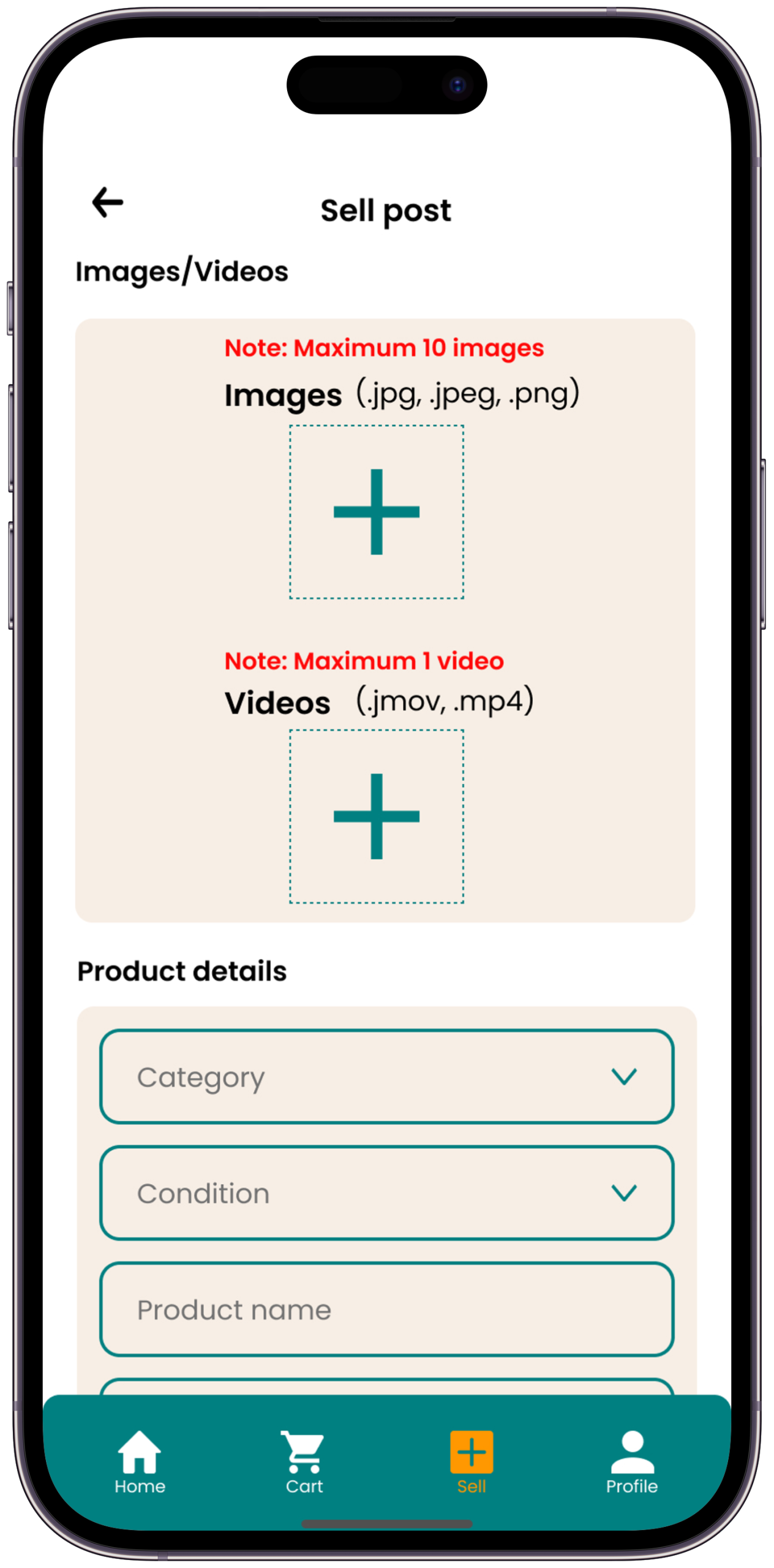
ScrapX Pickup Scheduling
Screen 03 Pickup Scheduling A structured booking interface that allows users to choose a pickup date, select a time slot, and specify scrap categories for collection. Meena: ""Booking this feels as easy as ordering something online.". Design decision: A calendar and time-slot picker replaces free-text scheduling to make the process clearer and faster for users.
Screen 04
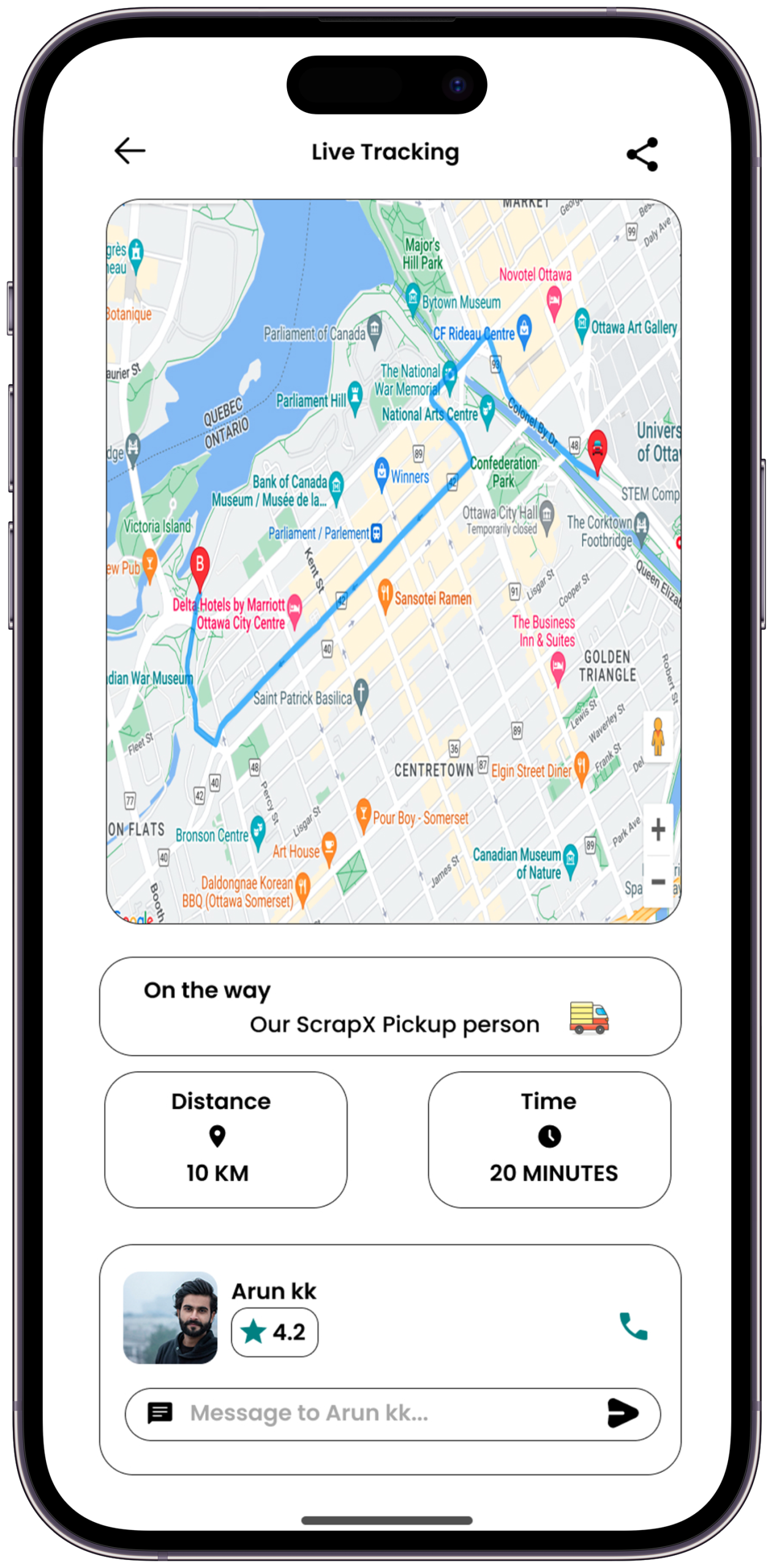
ScrapX Real-Time Tracking
Screen 04 Real-Time Pickup Tracking A live GPS tracking interface that shows the collector’s route and estimated arrival time. Users receive real-time updates so they know exactly when their scrap will be collected.A live GPS tracking interface that shows the collector’s route and estimated arrival time. Users receive real-time updates so they know exactly when their scrap will be collected. Meena: "Now I don’t have to wait all day wondering when the collector will arrive." Design decision: The tracking screen focuses on essential information such as dealer location, ETA, and pickup status to keep the interface simple and easy to understand.
Screen 05
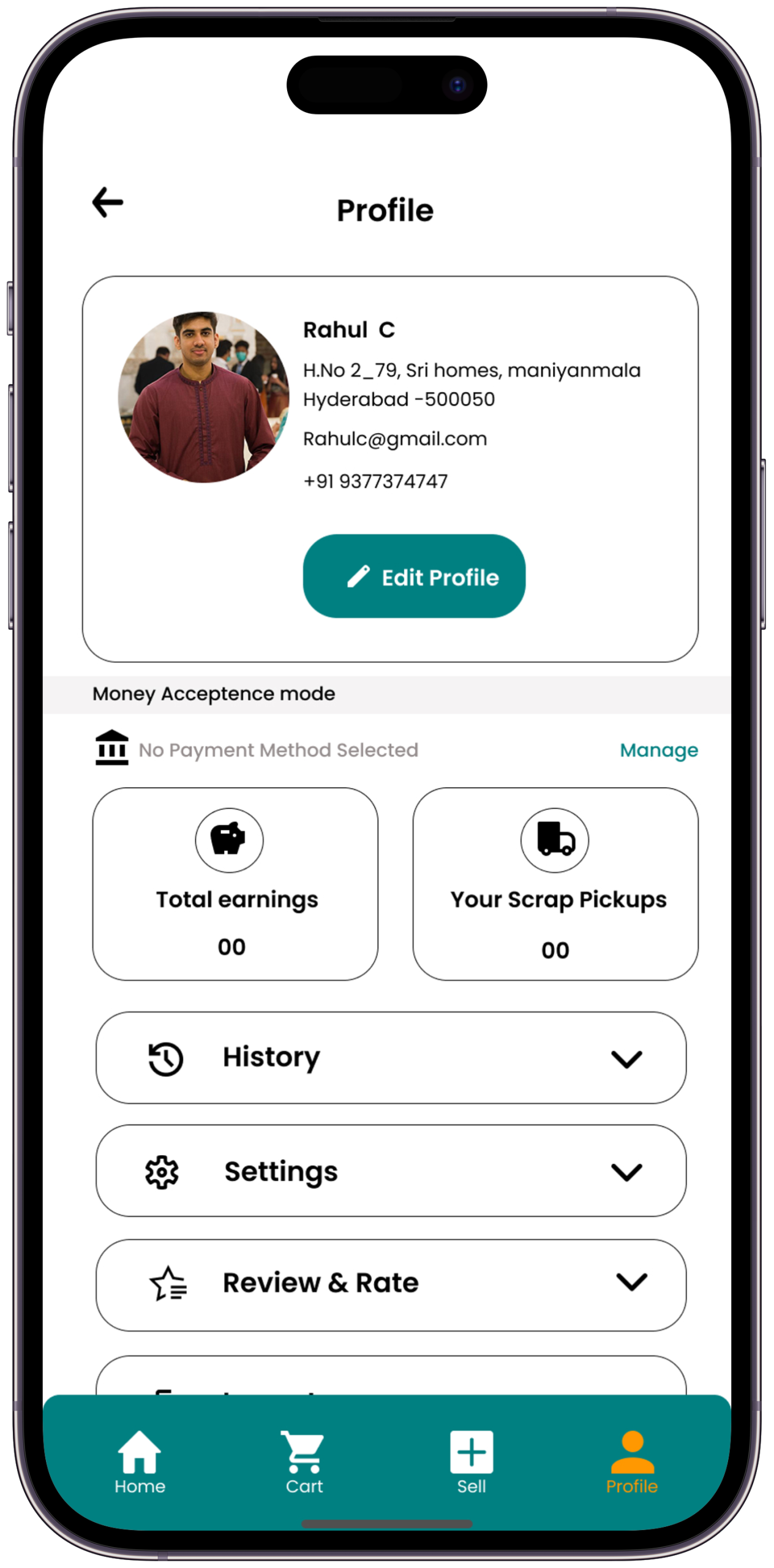
ScrapX Dealer Profile
Screen 05 Dealer Profile & Trust A dedicated profile screen showing dealer information, ratings, completed pickups, and service areas. This builds confidence and transparency in the scrap selling process. Ravi: My reputation matters. When people see my completed pickups and ratings, they trust me before I even arrive." Design decision: Dealer credibility indicators such as ratings, completed jobs, and service areas are highlighted to make trust visible and help users choose collectors confidently.
Screen 06
ScrapX Orders and Transaction History
Screen 06 Orders & Transaction History A complete record of previous scrap pickups including materials collected, payment details, and transaction summaries. This helps both users and dealers track past transactions easily. Meena: "I store receipts in a notebook and sometimes lose them." Every record is permanent, itemised, and always in her pocket. Design decision: Transaction history is designed as a structured list so users can quickly review past pickups while dealers maintain a transparent service record.
Act VValidation

A prototype is only as good as the people who test it. I ran moderated usability sessions with 8 participants across both personas — measuring not just completion rates, but emotional response and trust signals at each critical moment.

Chapter 07 — Prototyping & Usability Testing

Does it actually work?

8 moderated sessions measuring task completion, trust signals, and drop-off points

Participants8 total — 5 sellers, 3 dealers. Recruited via WhatsApp community groups from the survey phase.
Session FormatModerated think-aloud protocol. 6 remote via video call; 2 in-person in Bengaluru.
Duration40–55 minutes per session across 3 iterative rounds with design changes between each.
PrototypeFigma interactive prototype. Tasks given verbally; participants narrated thinking throughout.
TaskWhat We MeasuredV1 ResultAfter IterationStatus
Find live iron priceTime to locate price on homeAvg 14 secondsAvg 4 sec (price ticker above fold)✓ Resolved
Book a pickupCompletion rate + steps62% — 6 steps91% — 4 steps after flow simplification✓ Resolved
Understand dealer ratingTrust comprehension5/8 misread as popularity8/8 correct after renaming to "Reliability Score"✓ Resolved
Complete digital paymentCompletion + hesitation50% — cash still preferred75% after adding UPI shortcut + explanation copy~ Improved
Find transaction historyNavigation success37% found it (buried in profile)88% found it after moving to bottom nav✓ Resolved
Contact dealer in-appChat discovery rate25% discovered chat at all62% — still low, added to v2 backlog→ V2 Backlog
⚠ Unresolved Tension — Digital Payment

Even after adding a UPI shortcut and plain-language copy, 25% of seller participants still preferred cash across all three testing rounds. This is less a usability problem and more a deeply held habit and trust issue — cash feels verifiable and immediate in a way digital transfer doesn't, especially for first-time users.

V2 Hypothesis

By introducing a "Cash Confirmed" toggle for the dealer — combined with an immediate SMS receipt that mirrors a digital confirmation in familiar language — we can bridge the psychological gap between physical and digital transactions. Target: 60% digital payment rate among first-time sellers within 90 days of onboarding. This is a testable, measurable bet for the next iteration.

"If I can see exactly how much I'll get before the dealer even arrives — that alone changes everything. That's what I've always wanted."

— Usability Test Participant · Seller · Chennai · Session 5

"I kept clicking the star rating thinking it was like a Facebook like. Once it said 'Reliability Score' I understood immediately — that's about whether he shows up, not whether I liked him."

— Usability Test Participant · Seller · Bengaluru · Session 2 · Led to the "Reliability Score" rename
Act VIThe Outcome

After three rounds of iteration, the final solution was a unified platform that put trust at the centre of every interaction — from onboarding through to the digital receipt.

Chapter 08 — Final Solution & Impact

Before vs. After.

The informal system vs. the ScrapX solution — side by side

Before ScrapX
Prices negotiated verbally — no record, no fairness guarantee
Pickups arranged by phone call with zero confirmation mechanism
No dealer verification — complete reliance on word-of-mouth
Cash-only transactions, no receipts, no transaction history
No tracking — seller has no idea if dealer is coming or not
No platform for dealers to build a professional reputation
After ScrapX
Live, market-rate prices visible before any commitment is made
Calendar-based scheduling with 60-second dealer confirmation
Verified dealer profiles with reliability scores and review history
UPI/digital payments with itemised receipts and full history
Real-time GPS tracking with ETA push notifications
Dealer dashboard with booking management and reputation tools
Prototype Validation Results

Numbers that validated the design.

+47%Increase in task completion rate from V1 to final prototype across all core flows
91%Pickup booking completion in final usability round, up from 62% in V1
8/8Participants correctly understood dealer reliability scoring after final iteration
3xMore scrap transacted in sessions where live price comparisons were available
-68%Reduction in stated transaction anxiety after seeing the dealer verification features
4.6★Average satisfaction rating from usability test participants across all 8 sessions
Scope note: All metrics are derived from moderated usability testing with 8 participants on a Figma prototype. These are design validation results — real-world KPIs would require a live beta deployment.
What Success Looks Like — Phase 1 Launch Targets

Designing for real-world impact.

These are the measurable business outcomes that would define a successful v1 launch in Bengaluru. Prototype metrics are the starting point — these are the finish line.

150 Verified Dealers Onboarded Supply target for Year 1 in Bengaluru. Enough density to guarantee a dealer within 5km for every active seller.
5,000 Active Sellers Users completing at least one transaction. The demand-side proof point that validates the seller value proposition.
<5% Dealer No-Show Rate vs. 40% industry standard. The single most important quality metric — the one that builds or destroys trust at scale.
4.2★ Avg Reliability Score Maintained after 50+ reviews per dealer. Ensures the rating system reflects real behaviour, not just initial enthusiasm.
Act VIIWhat I Learned

Every project teaches you something about yourself as a designer. ScrapX taught me that the most important UX skill isn't wireframing or prototyping — it's the patience to understand people before solving for them.

Chapter 09 — Lessons Learned & Reflection

What the process taught me.

6 honest lessons from 10 weeks of research, design, testing, and iteration

01 Trust is the real product No amount of clever UI can fix a trust deficit. Verified profiles and digital receipts didn't just improve usability — they changed how users felt about the entire transaction. Emotional safety is a design requirement, not an afterthought.
02 Field research is irreplaceable Sitting in a household and watching a scrap transaction happen in real life revealed pain points no survey would have surfaced. Context changes everything. Budget time for observation, not just interviews.
03 Naming matters as much as design Renaming "Star Rating" to "Reliability Score" resolved a comprehension failure that no visual iteration could fix. Language is a design tool — copy decisions deserve as much attention as component states.
04 Simplify flows before polishing UI The booking flow dropped from 6 steps to 4 after testing — a structural change that improved completion by 29%. High-fidelity polish on a broken flow is wasted effort. Always validate architecture first.
05 Design for low digital literacy Not all users are comfortable with UPI. The solution wasn't removing the feature — it was explaining it plainly alongside the familiar cash option. Designing for low digital literacy means designing for everyone.
06 Focus v1 on the side that builds trust first By solving completely for the seller in v1, ScrapX creates a verified, active user base — which becomes the primary value proposition for dealers in v2. A guaranteed pool of trustworthy, ready-to-sell customers is what Ravi actually needs. A dedicated dealer product isn't an afterthought; it's the logical next phase powered by v1's success.
Closing Thought

ScrapX is a case study in designing for people who have been systematically underserved by systems they can't control. This wasn't about making a pretty app — it was about giving someone like Meena the same fair deal that was always available to people who already knew more than she did.

Next Case Study Zest Zero.

A sustainability-driven product experience designed to help households cook smarter, waste less, and embrace eco-conscious living.

— Open to work Have a project that needs thoughtful, careful UX? Available for freelance UI/UX design, case study documentation, and product design engagements. Let's talk about what you're building.